Maryland’s DDA Workforce Crisis: Why Families Are Struggling to Find Reliable Support Staff
July 20, 2026 • 3 min read
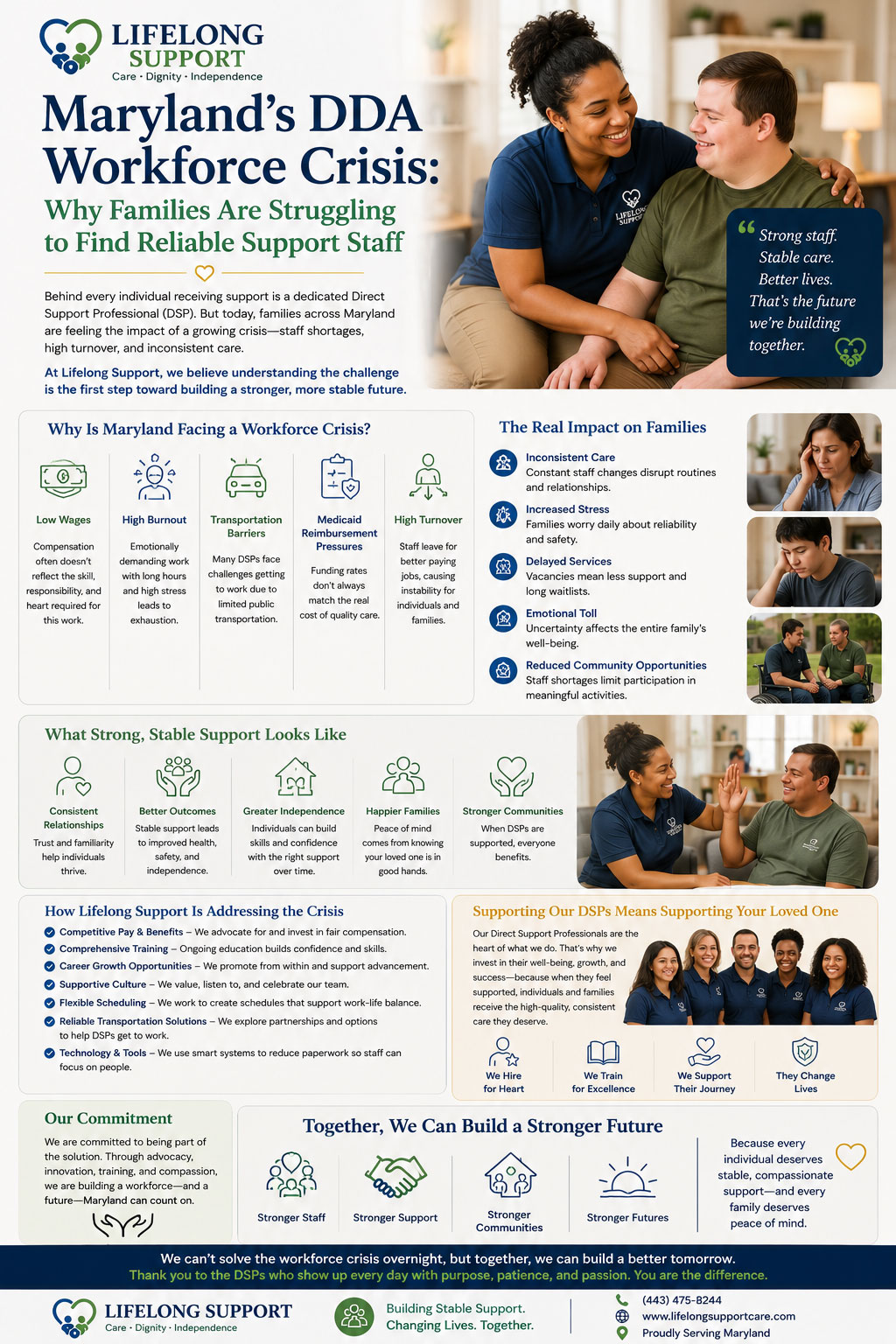
Families across Maryland are facing an increasingly difficult reality:
Finding reliable, consistent developmental disability support staff has become harder than ever.
Many families are experiencing:
- Frequent staffing changes
- Delayed services
- Inconsistent communication
- Burnout among caregivers
- High turnover
- Reduced provider availability
- Difficulty filling shifts
- Disruptions in continuity of care
Behind the scenes, Maryland’s developmental disability system is facing a significant workforce crisis.
And families are feeling the impact.
Why Is the Workforce Crisis Happening?
Direct Support Professionals (DSPs) play one of the most important roles in healthcare and community support.
They help individuals with:
- Personal care
- Medication support
- Transportation
- Daily living activities
- Community engagement
- Behavioral support
- Emotional support
- Safety monitoring
- Communication assistance
Yet despite the importance of their work, many DSPs face:
- Physically demanding responsibilities
- Emotional burnout
- Scheduling instability
- Transportation challenges
- Workforce shortages
- High stress environments
- Wage limitations across the industry
This combination has contributed to significant turnover throughout the developmental disability field.
Why Staffing Consistency Matters
For individuals with developmental disabilities, consistency is not just a convenience.
It is often essential.
Frequent staff changes can affect:
- Emotional security
- Trust
- Communication
- Behavioral stability
- Routine consistency
- Medication adherence
- Community participation
- Overall quality of life
Many individuals thrive when they build strong relationships with familiar caregivers who understand their routines, preferences, communication styles, and support needs.
When staffing becomes unstable, individuals and families may experience stress, frustration, and uncertainty.
The Emotional Impact on Families
Families often carry enormous pressure trying to fill the gaps left by staffing shortages.
Many caregivers already balance:
Families often carry enormous pressure trying to fill the gaps left by staffing shortages.
- Employment
- Parenting
- Financial responsibilities
- Medical coordination
- Transportation
- Advocacy
- Emotional caregiving
When support systems become inconsistent, caregiver burnout increases.Families may feel isolated, exhausted, and unsure who they can depend on.
Building a Stronger Workforce Culture
At Lifelong Support, we believe supporting individuals begins with supporting the people who care for them.
Strong organizations invest in:
- Staff training
- Professional development
- Respectful workplace culture
- Communication
- Leadership support
- Clinical guidance
- Emotional wellness
- Accountability
- Long-term retention
Caregivers who feel valued and supported are more likely to provide stable, compassionate, high-quality care.
Why Clinical Oversight Matters
As individuals with developmental disabilities live longer and experience increasingly complex healthcare needs, the need for clinically informed support continues growing.
This includes:
- Medication monitoring
- Chronic disease management
- Behavioral health coordination
- Mobility support
- Aging-related healthcare needs
- Nursing oversight
- Medical communication
Organizations with strong healthcare understanding are often better equipped to navigate these growing complexities.
Looking Toward the Future
The workforce challenges within Maryland’s DDA system are real.
But they also create an opportunity for organizations to rethink how support systems are built.
The future of developmental disability services will require:
- Better workforce development
- Stronger training systems
- Technology integration
- Improved care coordination
- Clinical collaboration
- Community partnerships
- Long-term sustainability planning
At Lifelong Support, we believe quality care begins with strong people, thoughtful leadership, and systems designed around dignity, stability, and compassion.
Because individuals and families deserve more than temporary solutions.
They deserve dependable support they can trust.
Lifelong Support was founded with a simple but powerful mission:
To provide compassionate, person-centered support that helps individuals live with dignity, safety, independence, and meaningful connection.
As we continue growing, our vision extends beyond traditional caregiving.
We believe the future of support services should combine:
- Compassion
- Clinical understanding
- Technology
- Innovation
- Community inclusion
- Long-term planning
- Human dignity
Whether supporting individuals with developmental disabilities, aging adults, chronically ill individuals, or underserved communities, our commitment remains the same:
People first. Always.